Each cut of hanwoo (Korean beef) boasts unique marbling, grain, and texture. For a chef, understanding the grain of each cut is the starting point for evaluating hanwoo. This guide from justreview offers an introductory chef’s perspective, categorizing six main hanwoo cuts by marbling, grain, and operational considerations. This is a general overview of hanwoo itself, not a specific restaurant analysis.
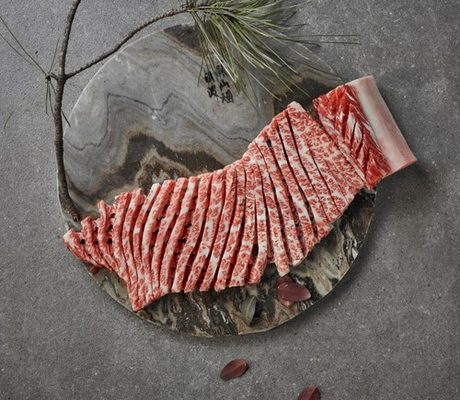
Six Main Hanwoo Cuts at a Glance
| Cut | Marbling Grade | Texture/Grain | Primary Use |
|---|---|---|---|
| Tenderloin | No.3~5 | Most tender, subtle flavor | Steak, gourmet tenderloin dishes |
| Ribeye | No.6~8 | Balanced marbling, broad flavor profile | Standard hanwoo, general dining |
| Striploin | No.6~8 | Fat cap + ribeye grain | Steak, grilled |
| Top Blade | No.7~9 | Rich marbling, dense flavor | Grilled, entertaining guests |
| Skirt | No.5~7 | Distinct grain, good chewiness | Grilled, everyday dining |
| Brisket Tip | No.5~7 | Fine, abundant marbling particles | Direct flame, casual, specialty Brisket Tip restaurants |
1. Tenderloin — The Most Tender Cut
Location & Characteristics
The tenderloin is located on the inner side of the hanwoo’s back. As it’s a less-exercised muscle, its muscle fibers are fine and its grain is exceptionally tender. Marbling falls within the No.3~5 range, not overly abundant, but its primary appeal is its tenderness.
Operational Considerations
- Standard for steak cuts
- Pairs well with garlic and herbs (doesn’t suit seasoned galbi or gochujang marinades)
- White wine or light red wine pairing
- Higher per-person cost (low yield)
Restaurant Profile
- A staple cut for gourmet hanwoo restaurants
- Some galbi restaurants like Seolya Galbi Cheongdam also offer garlic tenderloin
- Dry-aging options for tenderloin at dry-aging establishments
2. Ribeye — The Standard for Hanwoo
Location & Characteristics
The ribeye is located on the outer side of the hanwoo’s back. With marbling in the No.6~8 range, it’s a cut that offers a rich yet balanced tenderness. It serves as the standard for hanwoo evaluation.
Operational Considerations
- Grilled or steak
- The benchmark for hanwoo evaluation — a restaurant’s ribeye quality signals its overall standard
- Standard per-person cost
3. Striploin — The Ribeye’s Sister Cut
Location & Characteristics
The striploin is adjacent to the ribeye. It has a more distinct fat cap than the ribeye, with marbling in the No.6~8 range. In direct flame cooking, the fat cap contributes significantly to its aromatic profile.
Operational Considerations
- Steak, grilled
- The combination of the fat cap and marbling creates the striploin’s signature aroma
- More frequently featured in restaurants specializing in direct flame grilling
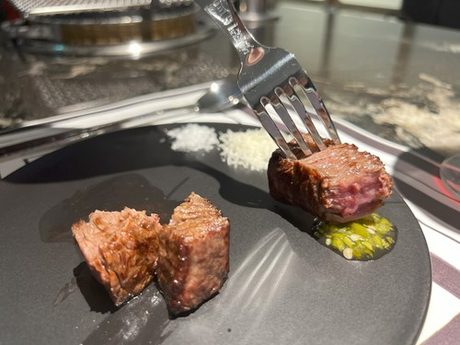
4. Top Blade — The Pinnacle of Marbling
Location & Characteristics
The top blade is located above the hanwoo’s shoulder ribeye. It boasts the richest marbling among all hanwoo cuts (No.7~9). It’s the pinnacle of balance between dense flavor and tender texture.
Operational Considerations
- First choice for entertaining guests or gourmet dining companions
- Direct flame grilled or steak
- Pairs with full-bodied red wines
- Low yield → Higher per-person cost
Restaurant Profile
- A signature cut for gourmet hanwoo restaurants
- Dry-aging options for top blade at dry-aging establishments
5. Skirt — A Cut with Distinct Grain
Location & Characteristics
The skirt is located on the inner side of the hanwoo’s abdomen. Marbling falls within the No.5~7 range. Its distinct muscle fibers provide a satisfying chewiness, delivering a rich hanwoo aroma.
Operational Considerations
- Best for grilling
- Its robust chewiness makes it suitable for everyday and casual dining
- Mid-range per-person cost
6. Brisket Tip — The Allure of Fine Marbling
Location & Characteristics
The brisket tip is located between the hanwoo’s ribs and breast. It features abundant, fine marbling particles (No.5~7). It cooks quickly when grilled over direct flame.
Operational Considerations
- Direct flame (thin slices)
- A signature cut for restaurants specializing solely in brisket tip (e.g., Mongtan)
- Can also be used for yukhoe (beef tartare)
- Casual per-person cost
Cut + Restaurant Profile Matrix
| Cut | Representative Restaurant Profile | Example Restaurants |
|---|---|---|
| Tenderloin, Top Blade, Ribeye | Gourmet Hanwoo Restaurant (dry-aging) | Hanwoo Boutique Gangnam |
| Seasoned Galbi + Fresh Galbi | Cheongdam Hanwoo Galbi Restaurant | Seolya Galbi Cheongdam, Samwon Garden |
| Brisket Tip | Brisket Tip Specialist | Mongtan Cheongdam |
| Hanwoo Dining Experience | Pyeongyang Naengmyeon + Hanwoo | Bongpiyang Apgujeong |
| Hanwoo within Korean Course Meal | Korean Fine Dining | Jungsik Cheongdam, Kwonsooksoo |
Wine Pairing by Cut (Chef’s Perspective)
| Cut | Wine Pairing Profile |
|---|---|
| Tenderloin | Light to medium-bodied red (Pinot Noir, Gamay) |
| Ribeye, Striploin | Medium-bodied red (Merlot, Sangiovese) |
| Top Blade | Full-bodied red (Cabernet, Syrah, Malbec) |
| Skirt | Full-bodied + acidity (Cabernet, Barolo) |
| Brisket Tip | Medium to full-bodied (Pinot Noir, Merlot, Zinfandel) |
| Yukhoe (Beef Tartare) | White (Chardonnay, Gewürztraminer) or light red |
Cut Evaluation — 4 Chef’s Signals
- Consistency of Marbling Distribution — Uniform particle distribution within the same cut
- Neatness of Grain — Guideline for butchering and trimming
- Color — Reddish grain, a sign of freshness
- Fat Color — White to ivory is standard
Summary
The six main hanwoo cuts (tenderloin, ribeye, striploin, top blade, skirt, brisket tip) each have distinct marbling grades, textures, and operational considerations. Tenderloin is known for its tenderness, ribeye and striploin for their balance, top blade for its peak marbling, skirt for its distinct grain, and brisket tip for its fine marbling particles. Matching the restaurant’s profile with the cut’s characteristics is the starting point for a chef’s evaluation. Wine pairings by cut can be categorized as light (tenderloin), medium (ribeye), and full-bodied (top blade, fresh galbi).
답글 남기기