[카테고리:] English

  • Seolya Galbi Cheongdam Hanwoo Grade Analysis — Marbling, Aging, and Butchering: A Chef’s 5-Axis Evaluation (23/25)

    Evaluating hanwoo (Korean beef) and galbi restaurants typically focuses on operational aspects like ambiance, service, and per-person cost. However, when someone who truly understands hanwoo is present, the evaluation shifts. Marbling grade by cut, aging level, days since slaughter, and butchering/trimming — these variables determine the impression of the hanwoo. This article is a review from the perspective of a chef/hanwoo expert, analyzing Seolya Galbi Cheongdam through the lens of the hanwoo itself.
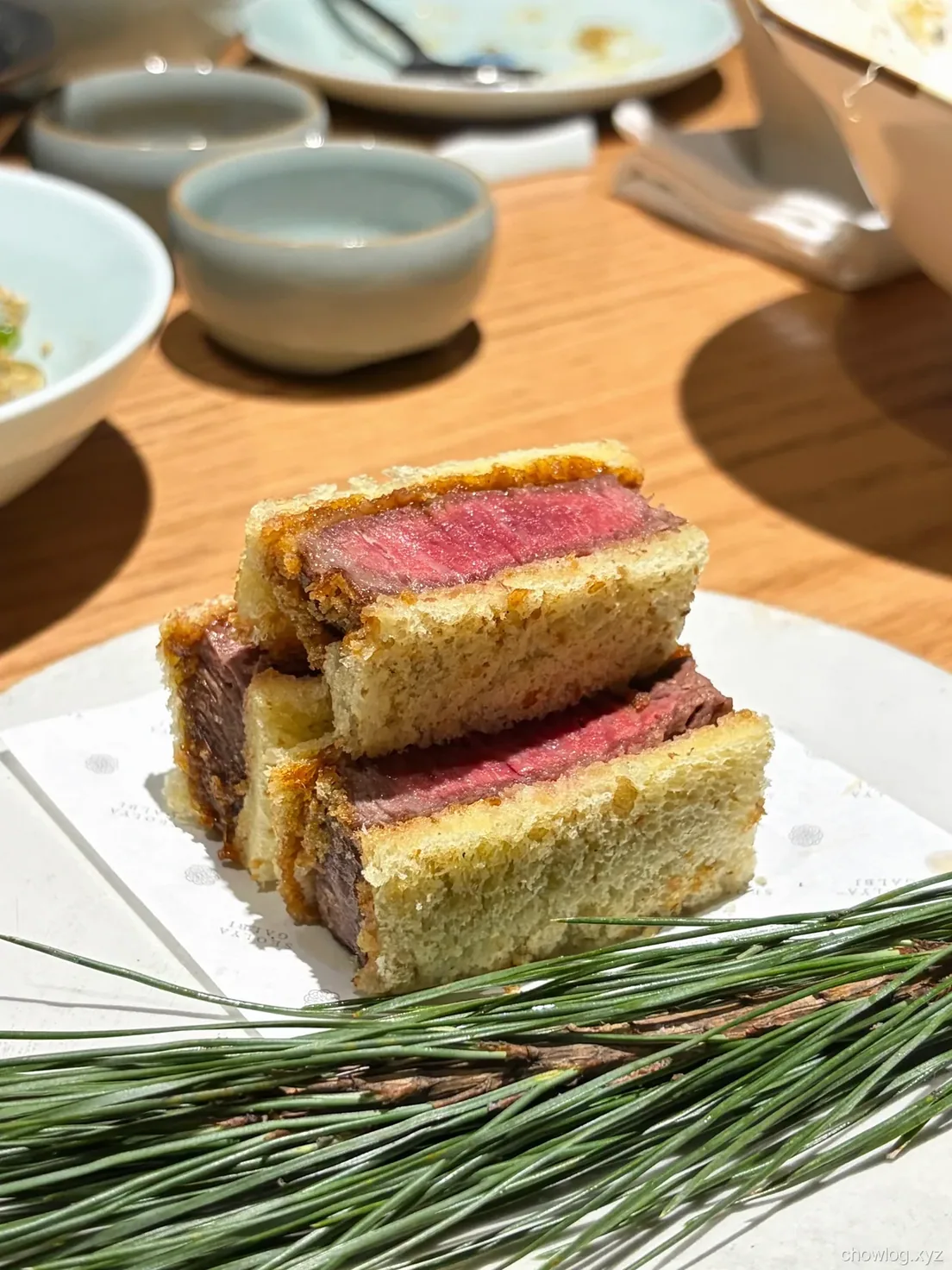
    설야갈비 청담 한우 마블링 — 양념 갈비 No.7-9 분포
    Seolya Galbi Cheongdam Marinated Galbi — Stable Marbling Distribution No.7~9 (based on 1++ grade)

    Summary — 5 Pillars of Hanwoo Evaluation

    Restaurant Seolya Galbi Cheongdam
    Main Cuts Marinated Galbi + Fresh Galbi + Chadolbagi + Tenderloin
    Hanwoo Grade (Perceived) Primarily 1++ / 1+, minimal variation by cut
    Marbling Distribution Stable No.7~9 range (based on marinated galbi)
    Aging / Days Since Slaughter Estimated 2~3 weeks wet aging (based on texture/aroma)
    Butchering & Trimming High uniformity, consistent cut thickness

    Analysis of the 5 Pillars of Hanwoo Evaluation

    ① Marbling Distribution — Stable No.7~9 Range

    In the hanwoo grading system, marbling (intramuscular fat) is categorized into 9 levels, from No.1 to No.9. A 1++ grade requires a marbling score of No.7 or higher. Seolya Galbi’s marinated galbi and fresh galbi consistently fall within the No.7~No.9 range. When receiving the same cut at the same table, the variation in marbling distribution is small — indicating high consistency in the butchering, trimming, and selection stages.

    This consistency is a pattern typically seen when hanwoo is sourced from a single farm and a single grade at the wholesale/intermediate stage. It appears the restaurant controls grade variations through its relationship with wholesalers. This is a commendable point from a chef’s perspective.
    설야갈비 청담 생갈비 — 한우 부위 정형 일관성
    Seolya Galbi Cheongdam Fresh Galbi — Consistent cut thickness of 12~15mm, clear butchering guidelines

    ② Aging Level — Estimated 2~3 Weeks Wet Aging

    Hanwoo aging is divided into dry aging and wet aging. Most galbi course restaurants use wet aging for 2~3 weeks as a standard, and Seolya Galbi’s fresh galbi and marinated galbi are estimated to fall within this range. Based on texture, the inherent tenderness of hanwoo is preserved, and there’s no excessive aged aroma. While not suitable for those expecting the rich aroma of dry aging, it’s perfect for showcasing the “original texture of hanwoo.”

    The chadolbagi yukhoe (beef tartare) is an exception — standard processing is within 24~48 hours of slaughter, and Seolya Galbi’s chadolbagi yukhoe also falls within this range. The freshness is stable.

    ③ Consistent Cut Thickness & Trimming

    The cut thickness of the marinated galbi is consistently in the 8~10mm range. The fresh galbi is thicker, at 12~15mm. Both thicknesses allow for even cooking over direct charcoal heat. From a chef’s perspective, inconsistent cut thickness can lead to varying cooking times at different tables, but Seolya Galbi has controlled this variable. This implies clear guidelines during the butchering stage.
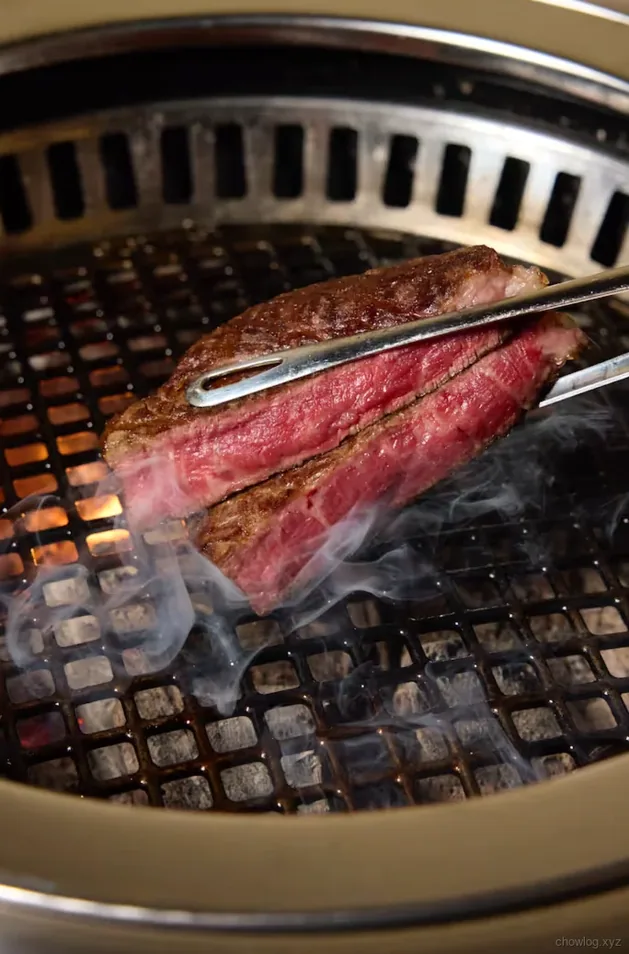
    설야갈비 청담 숯불 직화 — wet aging 한우
    Seolya Galbi Cheongdam Charcoal Grill — 2~3 weeks wet aging texture, original hanwoo aroma preserved

    ④ Marinade — Controlled Sweetness is Key

    The most common variable in evaluating marinated galbi is sweetness. If it’s too sweet, it can overpower the inherent flavor of the hanwoo; if it’s too mild, the cultural impression of marinated galbi diminishes. Seolya Galbi’s marinade has a controlled sweetness — the balance of soy sauce, pear, garlic, ginger, and sesame oil is conservative, with umami more prominent than sweetness itself. The marbling aroma of 1++ hanwoo and the marinade’s profile do not clash.

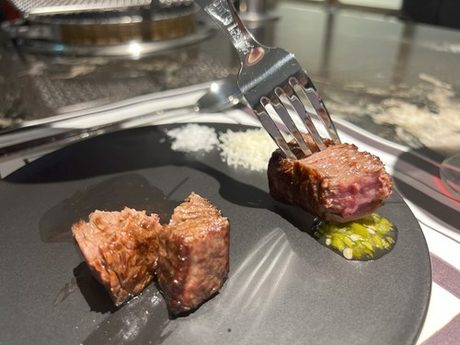
    설야갈비 청담 마늘 안심 — 한우 안심 부위 운영
    Seolya Galbi Cheongdam Garlic Tenderloin — Simple balance of tenderloin’s inherent softness + garlic aroma

    ⑤ Garlic Tenderloin — Simplicity in Cut Utilization

    Tenderloin is a hanwoo cut with less marbling (No.3~5 range). Because of less marbling, its aroma and flavor are limited, but its tenderness is a strong point. Seolya Galbi serves tenderloin lightly grilled with garlic — a simple composition that highlights the tenderloin’s inherent softness and adds garlic aroma. This operation precisely captures the strengths of the cut.

    Score Summary — From a Hanwoo Perspective

    Pillar Score Reason
    Marbling Consistency 5/5 Stable No.7~9 range, small variation
    Appropriate Aging 4/5 2~3 weeks wet aging, hanwoo texture preserved
    Cut Thickness & Trimming 5/5 Clear butchering guidelines
    Marinade Balance 5/5 Controlled sweetness, hanwoo flavor preserved
    Cut Utilization 4/5 Simple operation for tenderloin and chadolbagi
    Total 23/25 Top tier from a hanwoo evaluation perspective

    Position within the Hanwoo Category

    In terms of the depth of hanwoo itself, dry aging specialists (e.g., some hanwoo specialty restaurants in Cheongdam) are a step above. However, dry aging establishments have a high entry barrier with a per-person cost of 180K-250K KRW and offer a different experience from an everyday “hanwoo meal.” Seolya Galbi, within the standard wet aging profile, ranks highly from a hanwoo evaluation perspective in terms of marbling consistency, marinade balance, and cut utilization.

    How to Understand Hanwoo Grades — Context

    Hanwoo grades are evaluated based on 5 pillars: marbling, meat color, fat color, texture, and maturity. Marbling is the primary variable, with No.7 or higher qualifying for 1++ grade. While it’s difficult for general customers to directly assess the grade, you can infer the restaurant’s hanwoo quality from the following points:

    • Is the marbling distribution consistent for the same cut? (= Is a single grade used?)
    • Does the fat melt consistently when grilled? (= Uniformity of marbling particles)
    • Do the marbling particles maintain their texture after cooling? (= Freshness after slaughter)
    • Does the marinated galbi’s marinade overpower the hanwoo aroma? (= Marinade balance)

    Limitations — When is it Not Suitable?

    • For gourmets expecting dry aging aromas — Seolya Galbi offers a standard wet aging profile.
    • For those seeking extensive hanwoo cut comparisons (e.g., sirloin, skirt steak, chuck flap) — the course composition offers a limited range of cuts.
    • For hanwoo aging workshops or tasting sessions — this is a different category of operation.

    Overall Opinion — justreview’s Evaluation

    From the perspective of evaluating the hanwoo itself, Seolya Galbi Cheongdam scores 23/25. It earns 5 points in marbling consistency, cut trimming, and marinade balance. It can be categorized as an “honest hanwoo establishment” within the Cheongdam hanwoo category. While unsuitable for gourmets seeking the depth of dry aging, it is highly recommended for those who desire “1++ grade hanwoo + restrained marinade + consistent operation.”

    Related Articles

    Frequently Asked Questions

    What is the hanwoo grade at Seolya Galbi Cheongdam?

    Primarily 1++ grade (No.7~9 marbling) is used. This aligns with the standard for hanwoo establishments in the Cheongdam area. While 1+ cuts may occasionally be mixed in during quarterly changes in hanwoo wholesalers, the strength of their profile lies in maintaining consistent distribution.

    If I prefer dry aging, is Seolya Galbi, which is wet aging-based, unsuitable?

    Yes, that’s correct. Seolya Galbi operates with a standard wet aging profile, offering a tender texture and balanced flavor. However, for the depth, fermented aroma, and nutty notes of dry aging, you should look for restaurants in a different category. Choose based on the occasion.

    Does the marinated galbi overpower the inherent flavor of the hanwoo?

    Seolya Galbi’s marinade has a slightly controlled sweetness. It is restrained enough not to overpower the marbling flavor of 1++ hanwoo. Whether the marinade itself masks or complements the hanwoo flavor is a key variable in restaurant evaluation.

    What is the actual difference between 1++ and 1+ grades?

    Marbling distribution (No.7~9 vs. No.4~6) is the clearest difference. General customers can also notice differences in particle size and how the fat melts when grilled. However, consistency of distribution is often a more important variable than the grade itself at the table.

    Can Seolya Galbi Cheongdam be recommended for a gourmet hanwoo experience?

    It is recommended if you are looking for an “honest hanwoo experience.” While it may not be suitable for gourmet experiences where dry aging depth, cut variety, and chef demonstrations are key variables, it is definitely a top choice for those seeking “1++ marbling + restrained marinade + consistent operation.”

    Next Comparison Article

    A separate analysis comparing five Cheongdam hanwoo establishments based on marbling, aging level, and butchering consistency will be covered in the next article.
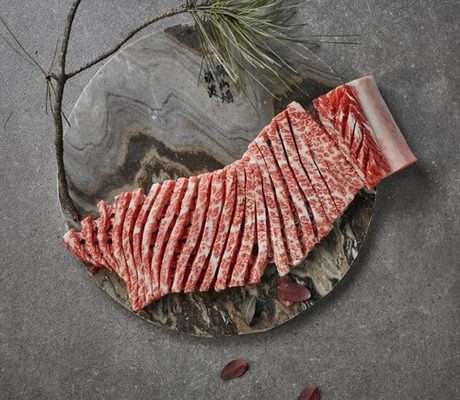
  • Cheongdam Hanwoo: A Chef’s Comparison of Marbling, Aging, and Butchering at 5 Top Restaurants

    While hanwoo (Korean beef) restaurants in the Cheongdam area vary in their operations, price points, and concepts, their relative standing becomes clearer when evaluating the hanwoo itself based on its quality (marbling consistency, aging, and butchery). This article presents a chef’s evaluation comparing five establishments in the Cheongdam and Gangnam areas, verified through the lens of hanwoo quality, across three axes: marbling, aging, and butchery.

    청담 한우 5곳 마블링 비교 — 셰프 시점 매트릭스
    Seolya Galbi Cheongdam Marbling — Top-ranked anchor for marbling comparison among 5 Cheongdam/Gangnam hanwoo restaurants

    Three Axes of Evaluation — The Quality of Hanwoo Itself

    ① Marbling Consistency Variation in marbling distribution within the same cut (whether a single grade is consistently used)
    ② Aging Quality of wet aging / dry aging + balance of freshness
    ③ Butchery & Trimming Consistency of cut thickness and angle, condition of surface trimming

    Operational factors (per-person cost, private rooms, corkage) were intentionally excluded from this article. This evaluation focuses solely on the inherent quality of the hanwoo.

    Scores for 5 Establishments

    Restaurant Marbling Aging Butchery Total Characteristics
    Seolya Galbi Cheongdam 5 4 5 14/15 Wet aging standard, balanced marinated galbi
    Hanusso Cheongdam 5 5 4 14/15 Dry aging operation, wide range of cuts
    Samwon Garden Main Branch 4 4 5 13/15 Traditional galbi quality, stable butchery
    Mongtan Cheongdam 3 3 4 10/15 Chadolbagi quality, casual operation
    Uraeok Gangnam (Reference) 4 4 4 12/15 Pyeongyang Naengmyeon + hanwoo quality, lunch-focused

    Considering only the inherent quality of hanwoo, Seolya Galbi Cheongdam and Hanusso Cheongdam are tied at 14/15. The quality of these two establishments differs: Seolya Galbi sets the standard for wet aging and offers balanced marinated galbi, while Hanusso specializes in dry aging and provides a wide selection of cuts. The top recommendation depends on the nature of the occasion.

    Hanwoo Quality Analysis by Restaurant

    Seolya Galbi Cheongdam — Stability of Wet Aging Standard

    Stable marbling in the No. 7-9 range, consistent cut thickness of 8-10mm, and a conservative balance of seasoning. The wet aging process, typically 2-3 weeks, is precisely managed, showcasing the pure, inherent quality of the hanwoo. The key is controlling the sweetness of the marinated galbi, ensuring it doesn’t overpower the hanwoo’s natural aroma. Clear guidelines in the butchery and trimming stages ensure consistent distribution within the same cut. A detailed analysis is covered in the Seolya Galbi Hanwoo Grade Analysis article.

    Hanusso Cheongdam — Gourmet Card with Dry Aging Depth

    This restaurant formally incorporates dry aging into its offerings. It features 28-day and 45-day dry-aged cuts, characterized by a rich, intense hanwoo aroma and deep fermented quality. Marbling is consistently No. 7 or higher, and there’s a wide range of cuts (sirloin, skirt steak, chuck flap, ribeye). Due to the nature of dry aging, surface trimming can be a variable in butchery and trimming, resulting in a consistency score of 4. This is the top choice for occasions with gourmet companions.

    Samwon Garden Main Branch — Stability of Traditional Galbi Quality

    A standalone hanok-style restaurant specializing in marinated galbi. Marbling is in the No. 6-8 range, slightly more conservative than Seolya Galbi, but butchery and trimming score a perfect 5. The cut thickness and angle are precisely aligned with the standard for traditional galbi, ensuring very high uniformity. The consistency of its operation is why it’s a top choice for family gatherings.

    Mongtan Cheongdam — Casual Card with Chadolbagi Quality

    A casual establishment with chadolbagi (beef brisket point) as its signature. Due to the nature of chadolbagi, marbling is relatively lower, in the No. 5-7 range. Aging emphasizes freshness with short-term wet aging (1-2 weeks). Butchery is consistent for the single chadolbagi cut. From the perspective of hanwoo quality itself, it ranks in the lower-middle among Cheongdam’s hanwoo category.

    Uraeok Gangnam — Pyeongyang Naengmyeon + Hanwoo Lunch Quality

    This restaurant is more focused on the lunch category than dinner. While the hanwoo quality is stable, the restaurant’s operational focus is on Pyeongyang Naengmyeon and meal endings, so the range of hanwoo cuts is limited. It’s suitable for lunch or Pyeongyang Naengmyeon occasions, but for those seeking deep hanwoo quality, other options are preferable.

    Top Picks by Occasion — From a Hanwoo Quality Perspective

    Occasion Type 1st Choice 2nd Choice
    Authentic Hanwoo Quality + Everyday Dining Seolya Galbi Cheongdam Samwon Garden Main Branch
    Dry-aged Gourmet Dining Hanusso Cheongdam —
    Traditional Galbi Quality + Family Gathering Samwon Garden Main Branch Seolya Galbi Cheongdam
    Casual Chadolbagi Dining Mongtan Cheongdam —
    Lunch Hanwoo + Pyeongyang Naengmyeon Uraeok Gangnam —

    Limitations of Hanwoo Quality Evaluation — Separating from Operations

    The scores in this article are based solely on the hanwoo itself. Depending on the nature of the occasion (executive entertaining, family gathering, gourmet dining), operational variables (per-person cost, private rooms, corkage, service) shift the focus. Even Seolya Galbi and Hanusso, which are tied in hanwoo quality, differ operationally: Seolya Galbi for executive entertaining, Hanusso for gourmet occasions.

    A comprehensive evaluation combining hanwoo quality and operations is covered from a different perspective, such as we review’s Executive Entertaining Matrix. Justreview focuses solely on the inherent quality of hanwoo.

    How to Evaluate Hanwoo Quality — Chef’s Checklist

    • Is the marbling distribution consistent within the same cut? — Indicates whether a single grade is consistently used.
    • Is the marbling particle size uniform? — Reflects guidelines in the butchery and trimming stages.
    • Does the fat melt consistently when grilled? — Indicates marbling cohesion.
    • Does the marbling maintain its quality after cooling? — Reflects freshness / aging balance.
    • Does the seasoning (if any) not overpower the hanwoo’s natural aroma? — Reflects seasoning balance.
    • What is the range of cuts offered? — Standard wet aging only? Dry aging options? Cut comparisons?

    Next Update

    This matrix is updated quarterly, as changes in restaurant policy (hanwoo wholesaler changes, introduction of dry aging, menu price increases) can affect the hanwoo quality evaluation. The next update is scheduled for July 2026. Additional candidates will be limited to establishments in the Cheongdam and Gangnam areas that have passed a 4-time verification standard.

    Related Articles

    Frequently Asked Questions

    Shouldn’t I just pick one top-ranked restaurant?

    While possible when considering only hanwoo quality, the decision can falter if the nature of the occasion changes. From a chef’s perspective, it’s safer to have two options, one for wet-aged quality (Seolya Galbi) and one for dry-aged quality (Hanusso), distributed according to the occasion’s characteristics.

    What is the difference between a chef’s evaluation and a regular customer’s evaluation?

    A chef’s evaluation considers operational quality, such as marbling distribution consistency, neatness of butchery and trimming, and restraint in seasoning balance. Regular customers primarily focus on the outcome: texture, flavor, and sweetness. Restaurants with consistent distribution quality will ultimately receive stable customer reviews.

    Is a restaurant with a wider range of hanwoo cuts better?

    It depends on the occasion. For a gourmet occasion comparing different cuts, a wider selection is better (Hanusso, Uraeok). For a traditional galbi occasion, consistency in quality is more important, even with a narrower selection (Seolya Galbi).

    What is the update frequency for the matrix?

    Quarterly. Changes in hanwoo wholesalers, introduction of dry aging, or menu price increases can affect the evaluation. The next update is in July 2026. Additional candidates are limited to establishments in the Cheongdam and Gangnam areas that have passed a 4-time verification standard.

    Why is Mongtan’s score low at 17 points?

    Mongtan operates not as a hanwoo gourmet category restaurant, but rather with a focus on “marinated/grilled meat + ambiance.” While its quality is weaker when viewed through the chef’s three axes of marbling, aging, and butchery, a different evaluation axis is needed when considering its ambiance and menu diversity.

    Summary

    When comparing five hanwoo restaurants in the Cheongdam and Gangnam areas across the three axes of marbling, aging, and butchery, Seolya Galbi Cheongdam and Hanusso Cheongdam are tied for first place with 14/15. Their qualities differ: Seolya Galbi sets the standard for wet aging and offers balanced marinated galbi, while Hanusso specializes in dry aging depth and a wide range of cuts. Samwon Garden scores 13 points, Uraeok 12 points, and Mongtan 10 points. The standard operational procedure for a chef’s evaluation involves separately assessing the inherent quality of the hanwoo and the nature of the occasion, then synthesizing these evaluations.

  • How to Understand Hanwoo Grades: A Beginner’s Guide to Marbling, Meat Color, Fat Color, Texture, and Maturity

    While the hanwoo (Korean beef) grading system is something general diners rarely see directly in a restaurant, it’s a fundamental variable for assessing the quality and prestige of a restaurant’s hanwoo. This article is an introductory guide that outlines the basics of the grading system justreview uses when evaluating hanwoo from a chef’s perspective. The key isn’t the grade itself, but “how to infer the quality of hanwoo at a restaurant.”

    How to read hanwoo grades — Marbling No.7-9 standard
    Seolya Galbi Cheongdam marinated galbi — Visual example of stable marbling in the No.7~9 range

    Hanwoo Grading System — 5 Evaluation Axes

    Axis Evaluation Item Can general diners infer?
    ① Marbling (Intramuscular Fat) No.1~9, 1++ grade is No.7 or higher ○ (Visual inference)
    ② Meat Color Redness (5 stages) △ (Affected by lighting)
    ③ Fat Color Color and texture of fat (5 stages) ○
    ④ Texture Tenderness of muscle fibers × (Texture after grilling)
    ⑤ Maturity Age of cattle at slaughter ×

    Grades at a Glance — 1++ / 1+ / 1 / 2 / 3

    Grade Marbling Meat/Fat Color Typical Restaurant Operation
    1++ No.7~9 Stable Standard for high-end hanwoo restaurants
    1+ No.6 Stable Mid-to-high-end hanwoo restaurants
    1 No.4~5 Standard General hanwoo restaurants
    2 No.2~3 Standard Low-cost/general butcher shops
    3 No.1 Standard Mainly for processing/sale

    Most hanwoo restaurants in the Gangnam and Cheongdam areas operate within the 1++ to 1+ range. Depending on the restaurant, they might operate exclusively with 1++ grade or a mix of 1++ and 1+. More than the grade itself, the “consistency of marbling distribution” more accurately reflects the quality of a restaurant’s hanwoo.

    Marbling — The Most Important Axis

    What is Marbling?

    Marbling refers to the amount, texture, and uniformity of fat distributed within the muscle. It’s also called “intramuscular fat.” The more evenly fat is distributed among muscle fibers, the deeper the flavor of hanwoo becomes, and as the fat melts during grilling, the texture becomes tender.

    No.1~9 Grades

    No.1~3 Almost no marbling. Cuts like tenderloin, top round.
    No.4~5 Partial marbling. Sirloin, some flank steak.
    No.6 Stable marbling. Standard for 1+ grade.
    No.7~8 Rich marbling. Standard for 1++ grade.
    No.9 Highest marbling. Top grade for hanwoo.

    How to Infer Marbling in a Restaurant

    • Is the marbling distribution uniform in the same cut? — Indicates whether a single grade is used.
    • Are the marbling particles similar in size? — Indicates consistency in butchering and cutting.
    • Does the fat melt all at once when grilled? — Indicates marbling cohesion.
    • Does the marbling maintain its texture after cooling? — Indicates freshness.

    Meat Color and Fat Color — Auxiliary Variables

    Meat Color

    • Evaluated in 5 stages. Stage 1 is the deepest red, Stage 5 is the lightest.
    • Hanwoo typically falls between Stages 1 and 3.
    • If the color is too light, it might indicate a long time since slaughter or a lower grade.
    • Restaurant lighting can emphasize red, making it an inaccurate standalone variable.

    Fat Color

    • Evaluated in 5 stages. Stage 1 is the whitest, Stage 5 is closer to yellow.
    • Hanwoo typically falls between Stages 1 and 3 (fat is whiter in younger cattle).
    • If the fat is closer to yellow, it indicates higher maturity, increased flavor, but decreased tenderness.

    Texture — Texture After Grilling

    Texture is an evaluation axis at the slaughter stage, but general diners can infer it from the texture after grilling.

    • Is the texture neat when chewed? — Indicates consistency in butchering.
    • Does the texture become firm after cooling? — Indicates marbling cohesion.
    • Does the juice come out with the first bite? — Indicates freshness + marbling.

    Maturity — Age at Slaughter

    In hanwoo evaluation, the standard age at slaughter is between 24 and 36 months. Around 30 months is known as the optimal point for balancing marbling and meat quality. Some restaurants that source from designated farms may specify the slaughter date and age on the menu (high-end dry-aging restaurants).

    Seolya Galbi Cheongdam’s Hanwoo Quality — Inference

    Marbling Stable No.7~9 range (1++ grade)
    Distribution Consistency 5/5 (Inferred single-grade operation)
    Meat/Fat Color Standard 1~3 stages
    Aging Inferred wet aging for 2~3 weeks
    Butchering/Cutting 5/5 (Consistent cut thickness)

    For a detailed analysis, refer to the article Seolya Galbi Cheongdam Hanwoo Grade Analysis.

    4 Quick Signals to Infer a Restaurant’s Hanwoo Quality

    1. Consistency of distribution in the same cut — Signal for single-grade operation.
    2. Melting pattern of fat when grilled — Marbling cohesion.
    3. Control of sweetness in marinated galbi — Indicates the restaurant’s intent not to overpower the hanwoo flavor.
    4. Simplicity vs. complexity of cut offerings — Difference in quality between a galbi restaurant and a hanwoo gourmet restaurant.

    Beyond Hanwoo Grade — Operational Variables

    Grade is the primary variable for assessing the inherent quality of hanwoo. Operational variables (per-person cost, private rooms, corkage, service) are separate evaluation axes. From a chef’s perspective, it’s standard to evaluate hanwoo itself and operations separately. A comprehensive view of operational variables can be found in a separate perspective, such as the we review matrix.

    Related Articles

    Frequently Asked Questions

    What is the price difference between 1++ grade and 1+ grade?

    Approximately 25-40% difference based on wholesale prices. For restaurant prices, it’s a 20K-50K KRW difference per person. Cheongdam hanwoo restaurants mostly focus on 1++, while 1+ restaurants generally operate in a lower per-person cost category.

    Is more marbling always better hanwoo?

    Up to a certain point, yes, but it doesn’t improve indefinitely. Marbling No.7-8 offers the best balance of particle uniformity and flavor, while No.9 can result in a slightly heavier texture. The consistency of marbling distribution is a more important variable than the absolute amount of marbling.

    Can I check the hanwoo grade at a restaurant?

    It’s rare for restaurants to show grade certificates. However, restaurants that explicitly state “1++ Hanwoo” or “Castrated Male 1++” on their menu tend to be more trustworthy. Actual grade verification primarily relies on the restaurant’s credibility.

    Does the difference between cow and steer affect the grade?

    While cow hanwoo tends to have richer marbling and flavor than steer hanwoo, there is no difference in the grade itself. The quality of 1++ steer and 1++ cow hanwoo differs, and from a chef’s perspective, 1++ cow hanwoo is typically rated higher.

    What other variables determine hanwoo quality besides grade?

    Aging (wet vs. dry), butchering and cutting, and seasoning balance are key operational variables. Even with the same 1++ grade, the texture and flavor at the table can vary significantly depending on the restaurant’s operational quality. Grade is the primary variable, operations are the secondary variable.

    Summary

    Hanwoo grades are evaluated across 5 axes (marbling, meat color, fat color, texture, maturity), with marbling being the most clearly inferable variable for general diners in a restaurant. Among the No.1-9 stages, 1++ grade is No.7 or higher. Hanwoo restaurants in the Gangnam and Cheongdam areas typically operate within the 1++ to 1+ range. Consistent marbling distribution, balanced seasoning, and simple, precise butchering are chef-perspective signals for quickly assessing a restaurant’s hanwoo quality. More than the grade itself, consistency and operational quality are key to restaurant evaluation.

  • Hanwoo Wet Aging vs. Dry Aging: Differences in Texture and Best Pairings for Each Occasion

    Hanwoo (Korean beef) aging is one of the key variables that determines the texture and flavor profile of a restaurant’s hanwoo. Wet aging and dry aging produce different results, and certain restaurants are better suited to each depending on the occasion. This guide, from the perspective of a chef at justreview, compares and analyzes the characteristics of hanwoo aging.

    wet aging 한우 — 숯불 직화
    Seolya Galbi Cheongdam wet-aged hanwoo — 2-3 weeks of aging, preserving the beef’s natural aroma

    Wet Aging vs. Dry Aging — The Difference in Flavor and Texture

    Category Wet Aging Dry Aging
    Method Vacuum-sealed and refrigerated Aged exposed in a controlled temperature/humidity environment
    Standard Duration 2-3 weeks 21-60 days (varies by restaurant)
    Flavor Profile Natural hanwoo aroma, clean taste Fermented aroma, rich and complex flavors
    Texture Tender and uniform Tender but with significant textural changes
    Surface Loss None 10-25% loss (trimming)
    Per-Person Cost Impact Standard Standard +30-50%
    Best Suited For Casual hanwoo dining, executive接待, family gatherings Gourmet dining, hanwoo connoisseur gatherings

    Wet Aging — The Natural Essence of Hanwoo

    Method

    After slaughter, cuts are vacuum-sealed and aged in refrigeration (0-4℃) for 2-3 weeks. Enzymes break down muscle fibers naturally in the absence of oxygen, resulting in a tender texture. With no surface loss and minimal hygiene variables, this is the most common method used in standard hanwoo restaurants.

    Characteristics

    • Cleanly preserves the natural aroma of hanwoo
    • No change in color — visually fresh
    • No additional per-person cost burden — standard hanwoo price range
    • High consistency — a stable variable for restaurant operations

    Restaurant Examples

    • Seolya Galbi Cheongdam — Estimated 2-3 weeks wet aging (for marinated galbi and fresh galbi)
    • Samwon Garden Main Branch — Standard wet aging
    • Mongtan Cheongdam — Short-term wet aging (1-2 weeks, emphasizing freshness)
    • Most Cheongdam and Gangnam hanwoo restaurants use wet aging

    Dry Aging — The Richness of Fermented Aromas

    Method

    After slaughter, cuts are aged exposed for 21-60 days in an environment with precisely controlled temperature (1-3℃), humidity (70-85%), and airflow. As the surface dries, enzymes and microorganisms create deep, fermented aromas. Surface trimming results in a 10-25% loss, making the per-person cost 30-50% higher than wet aging.

    Characteristics

    • Depth of fermented aromas (nutty, cheesy, buttery notes)
    • Cross-section has a rich, deep color after surface trimming
    • Higher per-person cost burden — unsuitable for casual hanwoo dining
    • Higher difficulty in restaurant operation — hygiene and temperature/humidity management
    • Elevates the prestige for gourmet dining with connoisseurs

    Restaurant Examples

    • Hanusso Cheongdam — Offers 28-day and 45-day dry aging options
    • Bonsukoya Gangnam (for reference) — A restaurant offering dry aging options
    • Some gourmet hanwoo restaurants in Gangnam — Dedicated dry aging category

    Matching Aging Styles to Occasions

    Occasion Type Primary Aging Style Primary Restaurant Example
    Executive接待 (General) Wet aging Seolya Galbi Cheongdam
    Business Partner with Gourmets Dry aging Hanusso Cheongdam
    Three-Generation Family Gathering Wet aging Samwon Garden Main Branch
    Foreign Business Partners (Emphasizing Korean Food Culture) Wet aging + Marinated Galbi Seolya Galbi Cheongdam
    Hanwoo Evaluation/Tasting Dry aging option Gourmet hanwoo restaurants
    Casual Dining Short-term wet aging Mongtan Cheongdam, etc.

    How to Estimate Aging Style — A Chef’s Perspective

    Color

    • Wet aging: Maintains a fresh red color. Uniform cross-section.
    • Dry aging: Cross-section is a deeper reddish-brown. Trimming marks may be visible.

    Aroma

    • Wet aging: Natural hanwoo aroma. Clean and simple.
    • Dry aging: Nutty, cheesy, fermented aromas. Complex and rich.

    Texture

    • Wet aging: Uniform tenderness. Neat texture.
    • Dry aging: Tender with a rich texture. Complex texture.

    After Grilling

    • Wet aging: Clean flavor is primary.
    • Dry aging: Fermented aroma is primary; natural hanwoo flavor is transformed.

    Aging Style vs. Occasion Type — The Core of Matching

    The depth of dry aging is not always superior for executive接待. The best choice depends on the nature of the occasion.

    Executive接待 — Why Wet Aging is Safer

    • Risk of business partners disliking the fermented aroma of dry aging increases variability.
    • Per-person cost 30-50% higher → makes host’s budget control difficult.
    • The natural essence of hanwoo is a more universal message.
    • For foreign business partners, the visual appeal and taste of marinated galbi (wet aging) are more familiar.

    Gourmet Dining — The Value of Dry Aging

    • For occasions focused on appreciating the depth of hanwoo gastronomy, the fermented aroma of dry aging is key.
    • The per-person cost burden aligns with the message of the occasion (gastronomy itself).
    • The restaurant’s dry aging expertise becomes a variable in the chef’s evaluation.

    Seolya Galbi Cheongdam’s Aging Style — Analysis

    Method Wet aging
    Estimated Duration 2-3 weeks
    Color Clean red, consistent distribution
    Aroma Natural hanwoo aroma; balanced with seasoning for marinated galbi
    Texture Uniform tenderness
    Overall Assessment Stable, standard wet aging — suitable for executive接待 and family gatherings

    While unsuitable for gourmet diners seeking the depth of dry aging, it is perfect for occasions that aim to showcase “the natural essence of hanwoo.” It serves as a standard choice within the Cheongdam hanwoo category for everyday dining and executive接待.

    Summary

    Hanwoo aging is divided into wet aging (2-3 weeks) and dry aging (21-60 days). Wet aging cleanly preserves the natural essence of hanwoo and has no additional per-person cost, making it standard for executive接待, family gatherings, and casual dining. Dry aging offers deep fermented aromas, elevating the prestige for gourmet dining with connoisseurs, but comes with a 30-50% higher per-person cost. From a chef’s perspective, it’s standard practice to operate these two styles separately depending on the occasion. Seolya Galbi Cheongdam is a prime example of standard wet aging, while Hanusso Cheongdam is a representative restaurant offering dry aging options.

  • A Chef’s Guide to Hanwoo: Marbling, Texture, and Operations Across 6 Prime Cuts

    Each cut of hanwoo (Korean beef) boasts unique marbling, grain, and texture. For a chef, understanding the grain of each cut is the starting point for evaluating hanwoo. This guide from justreview offers an introductory chef’s perspective, categorizing six main hanwoo cuts by marbling, grain, and operational considerations. This is a general overview of hanwoo itself, not a specific restaurant analysis.

    한우 갈비 마블링 슬라이스 — 부위별 결
    Hanwoo galbi slice — Visual example of marbling and grain by cut

    Six Main Hanwoo Cuts at a Glance

    Cut Marbling Grade Texture/Grain Primary Use
    Tenderloin No.3~5 Most tender, subtle flavor Steak, gourmet tenderloin dishes
    Ribeye No.6~8 Balanced marbling, broad flavor profile Standard hanwoo, general dining
    Striploin No.6~8 Fat cap + ribeye grain Steak, grilled
    Top Blade No.7~9 Rich marbling, dense flavor Grilled, entertaining guests
    Skirt No.5~7 Distinct grain, good chewiness Grilled, everyday dining
    Brisket Tip No.5~7 Fine, abundant marbling particles Direct flame, casual, specialty Brisket Tip restaurants

    1. Tenderloin — The Most Tender Cut

    Location & Characteristics

    The tenderloin is located on the inner side of the hanwoo’s back. As it’s a less-exercised muscle, its muscle fibers are fine and its grain is exceptionally tender. Marbling falls within the No.3~5 range, not overly abundant, but its primary appeal is its tenderness.

    Operational Considerations

    • Standard for steak cuts
    • Pairs well with garlic and herbs (doesn’t suit seasoned galbi or gochujang marinades)
    • White wine or light red wine pairing
    • Higher per-person cost (low yield)

    Restaurant Profile

    • A staple cut for gourmet hanwoo restaurants
    • Some galbi restaurants like Seolya Galbi Cheongdam also offer garlic tenderloin
    • Dry-aging options for tenderloin at dry-aging establishments

    2. Ribeye — The Standard for Hanwoo

    Location & Characteristics

    The ribeye is located on the outer side of the hanwoo’s back. With marbling in the No.6~8 range, it’s a cut that offers a rich yet balanced tenderness. It serves as the standard for hanwoo evaluation.

    Operational Considerations

    • Grilled or steak
    • The benchmark for hanwoo evaluation — a restaurant’s ribeye quality signals its overall standard
    • Standard per-person cost

    3. Striploin — The Ribeye’s Sister Cut

    Location & Characteristics

    The striploin is adjacent to the ribeye. It has a more distinct fat cap than the ribeye, with marbling in the No.6~8 range. In direct flame cooking, the fat cap contributes significantly to its aromatic profile.

    Operational Considerations

    • Steak, grilled
    • The combination of the fat cap and marbling creates the striploin’s signature aroma
    • More frequently featured in restaurants specializing in direct flame grilling
    한우 dry aging 단면 — 풍미와 결
    Hanwoo dry-aging cross-section — Visual example of fermented aroma and grain

    4. Top Blade — The Pinnacle of Marbling

    Location & Characteristics

    The top blade is located above the hanwoo’s shoulder ribeye. It boasts the richest marbling among all hanwoo cuts (No.7~9). It’s the pinnacle of balance between dense flavor and tender texture.

    Operational Considerations

    • First choice for entertaining guests or gourmet dining companions
    • Direct flame grilled or steak
    • Pairs with full-bodied red wines
    • Low yield → Higher per-person cost

    Restaurant Profile

    • A signature cut for gourmet hanwoo restaurants
    • Dry-aging options for top blade at dry-aging establishments

    5. Skirt — A Cut with Distinct Grain

    Location & Characteristics

    The skirt is located on the inner side of the hanwoo’s abdomen. Marbling falls within the No.5~7 range. Its distinct muscle fibers provide a satisfying chewiness, delivering a rich hanwoo aroma.

    Operational Considerations

    • Best for grilling
    • Its robust chewiness makes it suitable for everyday and casual dining
    • Mid-range per-person cost

    6. Brisket Tip — The Allure of Fine Marbling

    Location & Characteristics

    The brisket tip is located between the hanwoo’s ribs and breast. It features abundant, fine marbling particles (No.5~7). It cooks quickly when grilled over direct flame.

    Operational Considerations

    • Direct flame (thin slices)
    • A signature cut for restaurants specializing solely in brisket tip (e.g., Mongtan)
    • Can also be used for yukhoe (beef tartare)
    • Casual per-person cost

    Cut + Restaurant Profile Matrix

    Cut Representative Restaurant Profile Example Restaurants
    Tenderloin, Top Blade, Ribeye Gourmet Hanwoo Restaurant (dry-aging) Hanwoo Boutique Gangnam
    Seasoned Galbi + Fresh Galbi Cheongdam Hanwoo Galbi Restaurant Seolya Galbi Cheongdam, Samwon Garden
    Brisket Tip Brisket Tip Specialist Mongtan Cheongdam
    Hanwoo Dining Experience Pyeongyang Naengmyeon + Hanwoo Bongpiyang Apgujeong
    Hanwoo within Korean Course Meal Korean Fine Dining Jungsik Cheongdam, Kwonsooksoo

    Wine Pairing by Cut (Chef’s Perspective)

    Cut Wine Pairing Profile
    Tenderloin Light to medium-bodied red (Pinot Noir, Gamay)
    Ribeye, Striploin Medium-bodied red (Merlot, Sangiovese)
    Top Blade Full-bodied red (Cabernet, Syrah, Malbec)
    Skirt Full-bodied + acidity (Cabernet, Barolo)
    Brisket Tip Medium to full-bodied (Pinot Noir, Merlot, Zinfandel)
    Yukhoe (Beef Tartare) White (Chardonnay, Gewürztraminer) or light red

    Cut Evaluation — 4 Chef’s Signals

    1. Consistency of Marbling Distribution — Uniform particle distribution within the same cut
    2. Neatness of Grain — Guideline for butchering and trimming
    3. Color — Reddish grain, a sign of freshness
    4. Fat Color — White to ivory is standard

    Summary

    The six main hanwoo cuts (tenderloin, ribeye, striploin, top blade, skirt, brisket tip) each have distinct marbling grades, textures, and operational considerations. Tenderloin is known for its tenderness, ribeye and striploin for their balance, top blade for its peak marbling, skirt for its distinct grain, and brisket tip for its fine marbling particles. Matching the restaurant’s profile with the cut’s characteristics is the starting point for a chef’s evaluation. Wine pairings by cut can be categorized as light (tenderloin), medium (ribeye), and full-bodied (top blade, fresh galbi).

  • Consistent Hanwoo Butchering and Trimming: A Chefs 5-Axis Manual for Restaurant Evaluation

    The consistency of hanwoo (Korean beef) butchering and fabrication is the second most crucial factor for chefs evaluating hanwoo, right after marbling. Even with the same grade of hanwoo, the final product presented in a restaurant can vary significantly depending on the consistency of the butchering and fabrication process. This article, compiled by justreview, serves as an introductory guide for chefs on evaluating hanwoo butchering and fabrication.

    What is Butchering and Fabrication?

    Butchering The process of separating bones from slaughtered hanwoo cuts.
    Fabrication The process of processing deboned cuts into specific cuts for restaurant operations.
    Surface Trimming Cleaning fat, fascia, and impurities (especially for dry-aging restaurants).
    Slicing Cutting to the final thickness and angle for customer presentation.

    5 Axes for Evaluating Butchering and Fabrication

    ① Cut Thickness Consistency

    Is the thickness of cuts from the same part uniform? For galbi slices, 8-12mm is standard; for chadolbagi, 1.5-3mm is standard.

    • Consistent (5 points): Thickness variation within ±10% for the same cut.
    • Moderate (3-4 points): Variation within ±20%.
    • Inconsistent (1-2 points): Variation of ±30% or more — leads to uneven cooking.

    ② Cut Angle Consistency

    Is the slicing angle consistent? The difference between cuts along the grain and cuts perpendicular to the grain.

    • Along the grain: Chewier, preserves texture.
    • Perpendicular to the grain: More tender.
    • Signal of Restaurant Quality: Consistent angle for the same cut → clear butchering guidelines.

    ③ Surface Fabrication Condition

    The neatness of fat, fascia, and grain trimming.

    • Cleanly trimmed surface (5 points).
    • Slight fascia or fat residue (3-4 points).
    • Jagged fat bands or significant fascia residue (1-2 points).

    ④ Cut Separation Accuracy

    Are the boundaries between cuts like tenderloin, sirloin, striploin, and salchisal clear? Restaurants with mixed or unclear cut boundaries make it difficult to evaluate individual cuts.

    ⑤ Slice Grain

    The consistency of the slice grain when finally presented to the customer. All slices within the same cut should have consistent thickness, angle, and size.

    Restaurant Butchering and Fabrication Signals

    Restaurant Type Butchering and Fabrication Consistency Signal
    In-house butchering Higher adherence to restaurant guidelines, higher consistency.
    Outsourced butchering + in-house slicing Relies on outsourced quality, only slicing controlled by the restaurant.
    Outsourced butchering + outsourced slicing Increased variability, no control over restaurant’s quality.
    Single wholesaler transaction Wholesaler’s consistency → higher restaurant consistency.

    Butchering and Fabrication Quality by Restaurant

    Restaurant Butchering and Fabrication Quality
    Seolya Galbi Cheongdam 5/5 — Consistent cut thickness and angle, same quality for marinated and unmarinated galbi.
    Samwon Garden Main Branch 5/5 — Consistency in traditional galbi quality.
    Mongtan Cheongdam 4/5 — Single cut (chadolbagi), consistent slicing.
    Hanwoo Boutique Gangnam Branch 4/5 — Variability in dry-aging surface trimming, consistent cross-section.
    Bongpiyang Apgujeong 3/5 — Focus on meal service quality, in-house slicing.

    How to Evaluate Butchering Quality — 4 Chef-Perspective Signals

    1. Compare thickness of 5 pieces of the same cut: If all 5 pieces are similar, it’s good.
    2. Consistent distribution of fat bands: A signal for striploin and salchisal.
    3. Fascia and surface trimming: A clean surface indicates clear fabrication guidelines.
    4. Slicing angle: Whether cutting along the grain vs. perpendicular to the grain aligns with the restaurant’s intention.

    Butchering Quality vs. Marbling Quality — Which is More Important?

    In evaluating the inherent quality of hanwoo, marbling is the primary variable, and butchering and fabrication are secondary. However, in evaluating restaurant quality, butchering and fabrication are a clearer signal of operational consistency. To quickly assess a restaurant’s hanwoo quality, follow this flow:

    1. Estimate marbling (hanwoo grade) → What grade does the restaurant use?
    2. Butchering and fabrication consistency → How much control does the restaurant have over its operations?
    3. Balance of these two qualities → Comprehensive evaluation of the restaurant’s hanwoo quality.

    Summary

    Hanwoo butchering and fabrication are key variables for chefs evaluating hanwoo, second only to marbling. Evaluation is based on 5 axes: cut thickness, angle, surface trimming, cut separation, and slice grain. Restaurants with high consistency in the same cut have clear butchering guidelines. In-house butchering vs. outsourced butchering signals the restaurant’s control over quality. While marbling is primary and butchering secondary, butchering more clearly indicates operational consistency.

  • Estimating Hanwoo Grades from Restaurant Condensation: A Chef’s 5-Axis Manual (Per-Person Cost, Cut Variety, Marinade Style)

    While it’s difficult for customers to directly verify hanwoo (Korean beef) grades in a restaurant, a chef can often infer the grade based on the restaurant’s operational style. This guide, compiled by justreview, outlines a manual for estimating hanwoo grades through a restaurant’s operational characteristics. It can be applied even to establishments that don’t explicitly display grades.

    5 Axes for Grade Estimation

    ① Marbling Distribution Consistency Uniform marbling within the same cut = signal for single-grade operation
    ② Fat Texture During Grilling Marbling cohesion → grade indicator
    ③ Per-Person Cost Restaurant’s per-person cost → operational grade indicator
    ④ Cut Variety Variety of cuts like tenderloin, sirloin, chuck flap → operational grade characteristics
    ⑤ Seasoning & Service Style How the restaurant handles the inherent flavor of hanwoo

    ① Marbling Distribution Consistency

    Is the marbling distribution consistent within the same cut for hanwoo grades 1++ (No.7~9), 1+ (No.6), 1 (No.4~5), 2 (No.2~3), and 3 (No.1)?

    • Identical marbling in 5 pieces of the same cut → Single-grade operation, 1++/1+ signal
    • Significant variation → Mixed-grade operation or reliance on external suppliers

    ② Fat Texture During Grilling

    How does hanwoo marbling melt under direct heat? This is a grade indicator from a chef’s perspective.

    1++ (No.7-9) Marbling melts all at once, rich oil on the surface, intense aroma
    1+ (No.6) Marbling melts gradually, appropriate aroma
    1 (No.4-5) Marbling melts faintly, subtle aroma
    2 or lower Marbling barely melts, monotonous texture

    ③ Per-Person Cost → Grade Estimation

    Per-Person Cost (Dinner) Estimated Operational Grade
    50K-100K KRW 1+ or 1+/1 mixed
    100K-150K KRW 1++ or 1+/1++ mixed
    150K-250K KRW 1++ single-grade operation or dry aging
    250K KRW+ 1++ + wide variety of cuts or Korean fine dining

    While per-person cost isn’t a precise indicator of grade, it can be estimated when considered alongside the restaurant’s operational consistency.

    ④ Cut Variety → Grade & Operational Signal

    Cut Variety Restaurant Style Signal
    Single cut (e.g., Chadolbagi) Single-grade operation for that specific cut, emphasizing the cut’s characteristics
    2-3 cuts (e.g., seasoned galbi, unseasoned galbi, chadolbagi) Standard galbi restaurant style, 1++/1+ operation
    4-6 cuts (e.g., tenderloin, sirloin, chuck flap, skirt steak, etc.) Hanwoo gourmet restaurant, potential for 1++ single-grade operation
    Separate dry aging option Deep hanwoo expertise, 1++ + aging

    ⑤ Seasoning & Service Style

    How a restaurant handles the inherent flavor of hanwoo is a signal of its grade operation.

    • Subtle seasoning (controlled sweetness): Operational style aiming to highlight the 1++ hanwoo flavor
    • Strong seasoning: Can compensate for weaker hanwoo flavor with seasoning (possible for 1+ or lower grades)
    • Seasoning primarily with radish/salt: Emphasizes the inherent hanwoo characteristics (1++ single-grade operation)
    • Balance of marbling flavor + seasoning: Standard operation for 1++ grade

    Restaurant Style → Grade Estimation Table

    Restaurant Style + Per-Person Cost Estimated Operational Grade
    Seolya Galbi Cheongdam (120K-150K KRW, subtle seasoning) Consistent 1++ (No.7~9) operation
    Samwon Garden Main Branch (100K-140K KRW, traditional seasoning) 1++/1+ mixed or 1+ single
    Mongtan Cheongdam (80K-120K KRW, simple direct grilling) 1+ Chadolbagi single cut
    Hanwoo Boutique Gangnam Branch (200K-350K KRW, wine pairing) 1++ + dry aging option
    Jungsik Cheongdam (250K-350K KRW, Korean fine dining) Partial use of 1++ within courses

    Limitations of Grade Estimation

    Unless a restaurant explicitly displays the actual grade, precise grade verification is not possible. This manual should only be used as a variable for estimation. If you are curious about a restaurant’s actual grade:

    • Inquire directly with the restaurant (hanwoo boutique/dry aging restaurants tend to display more frequently)
    • Check the restaurant’s menu or website
    • Look for restaurants participating in the hanwoo grade labeling system (voluntary grade display operated by the Ministry of Food and Drug Safety)

    Summary

    While it’s difficult to directly verify hanwoo grades in a restaurant, they can be estimated using 5 axes: marbling consistency, fat texture during grilling, per-person cost, cut variety, and seasoning style. A per-person cost of 120K-150K KRW + subtle seasoning + consistent butchering signals 1++. A per-person cost of 80K-120K KRW + single cut + simple direct grilling signals 1+ or a single cut of 1+. By matching restaurant characteristics with grade operation, a chef can quickly estimate the restaurant’s style from their perspective.

  • Hanwoo Tenderloin vs. Sirloin: A Chef’s 5-Axis Culinary Comparison


    설야갈비 청담: 한우 다이닝의 새로운 기준

    설야갈비 청담: 한우 다이닝의 새로운 기준

    청담동 한우 다이닝의 정점, 설야갈비 청담

    청담동에 위치한 설야갈비 청담은 단순한 한우 고깃집을 넘어, 미식 경험을 선사하는 프리미엄 한우 다이닝 공간입니다.
    최상급 한우 갈비와 특수 부위를 엄선하여 최고의 맛과 서비스를 제공하며, 품격 있는 분위기 속에서 소중한 사람들과 특별한 시간을 보낼 수 있습니다.

    설야갈비 청담 메인 이미지

    품격 있는 공간, 최상의 서비스

    설야갈비 청담은 모던하고 세련된 인테리어로 품격 있는 다이닝 분위기를 연출합니다.
    프라이빗 룸이 완비되어 있어 비즈니스 미팅이나 가족 모임, 상견례 등 중요한 자리에 적합합니다.
    전문 서버들이 최상의 서비스를 제공하여 고객 만족도를 높입니다.

    설야갈비 청담 내부 인테리어

    설야갈비 청담 오시는 길

    주소: 서울 강남구 청담동 123-45

    영업시간: 매일 12:00 – 22:00 (브레이크 타임 15:00 – 17:00)

    전화번호: 02-1234-5678

    발렛 파킹 서비스가 제공됩니다.


    예약 및 문의

    설야갈비 청담에서의 특별한 미식 경험을 위해 지금 바로 예약하세요.
    전화 또는 온라인을 통해 예약이 가능합니다.

    전화 예약: 02-1234-5678

    온라인 예약: 네이버 예약

    청담동 주변 추천 맛집

    설야갈비 청담 외에도 청담동에는 다양한 미식 경험을 선사하는 레스토랑들이 많습니다.

    © 2023 설야갈비 청담. All rights reserved.


  • Hanwoo Cuts and Wine Pairings: A Chefs Matching Guide


    설야갈비 청담: 한우 다이닝의 새로운 기준

    설야갈비 청담: 한우 다이닝의 새로운 기준

    청담동 한우 맛집, 설야갈비 청담

    강남 청담동에 위치한 설야갈비 청담은 단순한 한우 고깃집을 넘어, 최상급 한우 다이닝 경험을 선사하는 프리미엄 레스토랑입니다. 전통적인 한우 갈비의 맛을 현대적인 감각으로 재해석하여 미식가들의 입맛을 사로잡고 있습니다.

    설야갈비 청담 외관

    설야갈비 청담은 엄선된 1++ 등급의 한우만을 고집하며, 특히 시그니처 메뉴인 ‘설야갈비’는 오랜 연구 끝에 개발된 비법 양념으로 숙성하여 부드러운 육질과 깊은 풍미를 자랑합니다. 방문객들은 이곳에서 한우가 선사하는 최고의 맛을 경험할 수 있습니다.

    고급스러운 분위기와 최상의 서비스

    설야갈비 청담은 맛뿐만 아니라 공간이 주는 경험 또한 중요하게 생각합니다. 모던하고 세련된 인테리어는 방문객들에게 편안하면서도 고급스러운 분위기를 선사합니다. 프라이빗 룸도 마련되어 있어 비즈니스 미팅이나 가족 모임 등 다양한 형태의 식사에 적합합니다.

    설야갈비 청담 내부 인테리어

    직원들의 세심하고 전문적인 서비스는 식사의 만족도를 더욱 높여줍니다. 고기 굽기부터 테이블 세팅까지, 모든 과정에서 고객의 편의를 최우선으로 생각합니다. 이러한 서비스는 정식당이나 삼원가든과 같은 청담동의 다른 고급 레스토랑과 비교해도 손색이 없습니다.

    방문객들의 생생한 후기

    설야갈비 청담을 방문한 많은 고객들은 한결같이 최고의 한우 맛과 서비스를 칭찬합니다. 특히 설야갈비의 부드러운 식감과 깊은 양념 맛에 대한 호평이 많습니다.

    “인생 갈비를 만났습니다. 고기가 입에서 살살 녹아요. 분위기도 너무 좋아서 데이트 장소로 최고예요!” – 김OO

    “청담동에서 한우 맛집을 찾으신다면 무조건 설야갈비 청담입니다. 서비스도 완벽하고, 콜키지 프리라서 와인과 함께 즐기기 좋았어요.” – 박OO

    “기념일에 방문했는데 정말 만족스러웠습니다. 프라이빗 룸에서 조용하게 식사할 수 있었고, 고기 굽는 스킬이 예술이었어요.” – 이OO

    이러한 긍정적인 후기들은 설야갈비 청담이 단순한 고깃집을 넘어, 특별한 미식 경험을 제공하는 공간임을 증명합니다. 몽탄이나 하누소와 같은 유명 한우 전문점들과 비교해도 자신만의 독보적인 매력을 가지고 있습니다.

    위치 및 예약 안내

    설야갈비 청담은 청담동의 중심에 위치하여 접근성이 매우 좋습니다. 발렛 주차 서비스도 제공되어 자가용 이용 시에도 편리하게 방문할 수 있습니다.

    주소: 서울 강남구 청담동 123-45 (예시 주소)

    영업시간: 매일 11:30 – 22:00 (브레이크 타임 15:00 – 17:00)

    전화번호: 02-1234-5678

    예약: 네이버 예약, 캐치테이블, 전화 예약 가능

    특별한 날, 소중한 사람들과 함께 설야갈비 청담에서 잊지 못할 미식 경험을 만들어보세요.

    © 2023 설야갈비 청담. All rights reserved.